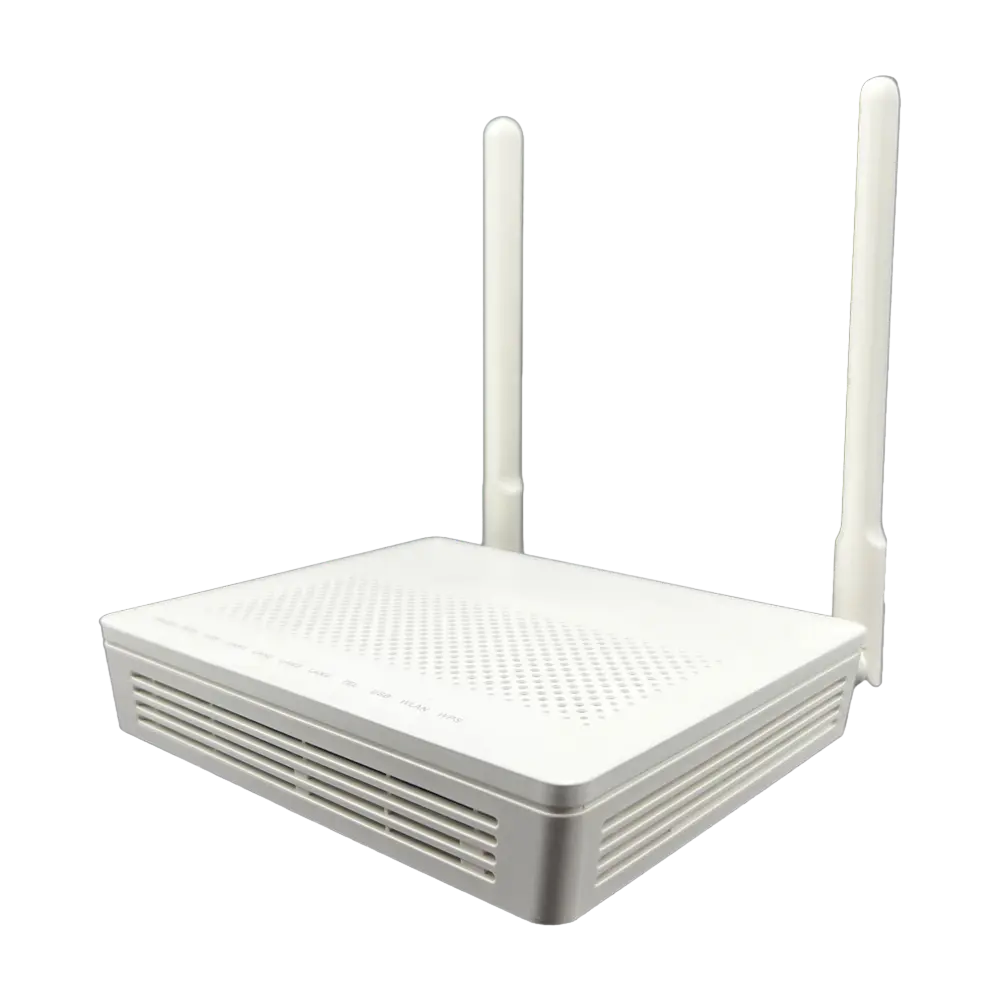
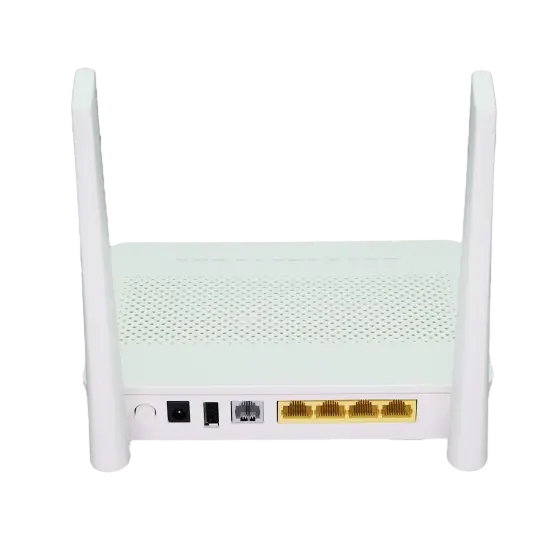
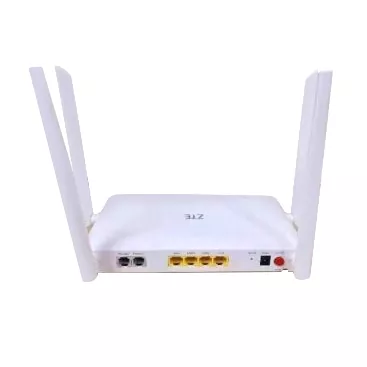
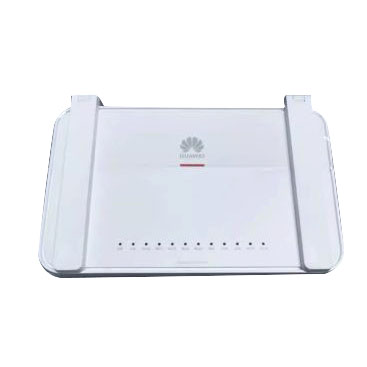
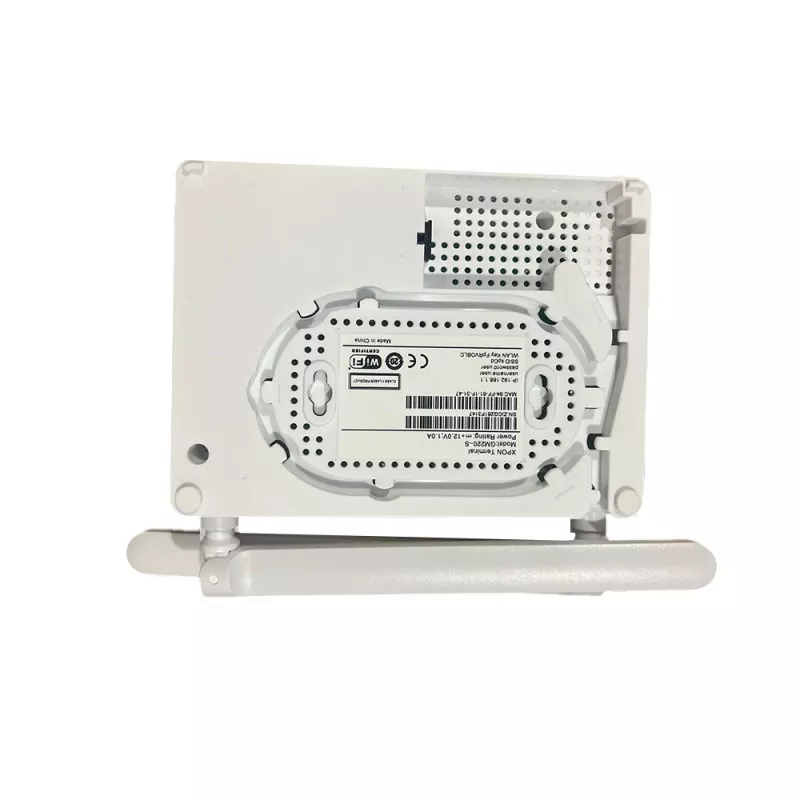
The relentless expansion of cloud gaming, 8K video streaming, and massive IoT deployments has imposed unprecedented pressure on last-mile access infrastructure. Within this evolving landscape, the Dual Band WiFi6 ONU ONT emerges as a critical enabler, merging the capacity of 10G PON with the spectral efficiency of 802.11ax. Unlike conventional ONUs that treat Wi-Fi as an auxiliary channel, modern designs integrate WiFi6 as a native forwarding plane, directly tackling latency, contention, and throughput bottlenecks in multi-dwelling and enterprise scenarios.
Architectural Superiority of WiFi6-Integrated Optical Network Terminals
Traditional ONT devices often suffer from protocol conversion loss between the PON MAC and the WLAN subsystem. The new generation of integrated platforms eliminates this gap through a unified queuing mechanism. Key advancements include:
Native 1024-QAM modulation – achieving near-wireline spectral density over the air.
OFDMA-based upstream scheduling – reducing collisions from dozens of stations to near-deterministic behavior.
BSS coloring for spatial reuse – critical for urban high-rise buildings with overlapping basic service sets.
These features become truly effective only when tightly coupled with the GPON or XGS-PON uplink. A poorly integrated terminal turns WiFi6 into an overhyped feature; but a properly architected Dual Band WiFi6 ONU ONT delivers sub-millisecond air interface latency while maintaining full wire-speed forwarding from the OLT.
Operational Scenarios That Demand High-Performance ONU/ONT
Several deployment contexts now mandate the adoption of WiFi6-capable optical terminals, moving beyond the “good enough” philosophy of earlier WiFi5 designs.
Dense Residential Apartments and Student Housing
In buildings with more than twenty active access points per floor, co-channel interference becomes crippling. WiFi6’s color-spatial reuse and adaptive CCA (clear channel assessment) thresholds allow each Dual Band WiFi6 ONU ONT to coexist gracefully, maintaining minimum throughput guarantees even during evening peak hours.
Small-to-Medium Business (SMB) Headquarters
SMBs no longer separate access switches from wireless controllers. An ONU that integrates a 2.5GbE LAN port and dual-band WiFi6 can serve up to one hundred concurrent clients—handling video conferencing, local NAS access, and VoIP without dedicated APs.
Industrial Warehouses and Logistics Centers
High-ceiling environments with moving robots and handheld terminals require robust uplink connectivity. When positioned as a mesh leaf, a WiFi6 ONT provides deterministic roaming and low-latency handovers, unlike consumer-grade routers.
Comparative Matrix: WiFi6 ONU vs. Legacy Fiber Terminals
The following comparison highlights functional differentiators without referencing numerical metrics, focusing instead on architectural capabilities.
Capability
Legacy WiFi5 ONT
Current Dual Band WiFi6 ONU ONT
Multi-user uplink efficiency
Contention-based (CSMA/CA)
Scheduled OFDMA + MU-MIMO
Interference resilience
Basic CCA, no BSS coloring
BSS coloring, adaptive transmit power
Target wake time (TWT)
Not supported
Native TWT for IoT power saving
Encryption & key management
WPA2 with 4-way handshake
WPA3 SAE + 192-bit security suite
PON uplink integration
Separate driver stacks
Unified packet scheduler (PON + WLAN)
Protocol-Level Challenges Solved by Modern ONU/ONT Designs
One persistent difficulty in fiber-wireless convergence is the mismatch between the PON’s fixed-length GEM frames and the variable-length A-MPDU aggregates of WiFi6. Leading ONU vendors have addressed this through dynamic buffer negotiation with the OLT, ensuring that jitter-sensitive traffic (e.g., real-time video) is not delayed by bulk TCP transfers. Furthermore, advanced QoS mapping maps WiFi6 access categories (VO, VI, BE, BK) directly to PON’s T-CONT queueing types, eliminating unnecessary packet reordering.
Power Consumption and Thermal Design Trade-offs
While WiFi6 chipsets inherently consume more active power due to higher modulation complexity, a well-designed optical terminal implements per-packet duty cycling. The device remains in a low-power deep sleep until the OLT signals a downstream GEM port, or until a WiFi6 station triggers an uplink transmission. This approach reduces the need for active cooling even when the Dual Band WiFi6 ONU ONT operates at full air interface capacity.
Standards Compliance and Interoperability Imperatives
Interoperability remains the cornerstone of carrier-grade deployments. Any ONU/ONT must pass rigorous testing with major OLT brands (e.g., Huawei, Nokia, ZTE) and WiFi6 client ecosystems (Intel, Qualcomm, Broadcom). Compliance with the following specifications is non-negotiable:
ITU-T G.984.x (GPON) or G.987 (XG-PON) with OMCI managed Wi-Fi parameters.
IEEE 802.11ax draft 5.0 or later, including mandatory MU-MIMO and OFDMA.
TR-069 (CWMP) for remote configuration of both PON and WLAN profiles.
A non-compliant Dual Band WiFi6 ONU ONT will either fail to associate with mixed clients or cause excessive OLT alarms due to malformed OMCI messages. Therefore, sourcing from manufacturers that maintain active membership in the Broadband Forum and Wi-Fi Alliance is a critical procurement criterion.
Deployment Best Practices for Fiber + WiFi6 Integration
Successful field deployment requires attention to factors often overlooked in lab validation:
Radio resource management – The ONU’s auto-channel selection algorithm must avoid DFS (radar) bands if the OLT cannot handle channel-switch announcements gracefully.
Multicast optimization – Converting IGMP joins to PON multicast GEM ports while also mapping to WiFi6 multicast-to-unicast conversion.
Provisioning workflows – Using ONU’s serial number and WLAN MAC address as dual identifiers in the OLT’s whitelist.
Without these practices, network operators may see high CPU load on the ONU, packet loss during channel scanning, or PON link flapping when the radio re-initializes.
Why Shanwei Tenkilometers Communication Technology Co., Ltd. Stands Out
Given the complexity of integrating gigabit PON uplinks with the full WiFi6 feature set, selecting an experienced manufacturing partner is decisive. Shanwei Tenkilometers Communication Technology Co., Ltd. – a national high-tech and AAA credit enterprise – has accumulated deep expertise in precisely this domain. The company’s product portfolio includes optical fiber access modules, power‑special communication equipment, and optical fiber communication modules, all backed by ISO9001, TLC, environmental, and occupational health safety certifications.
In the realm of high‑performance terminals, Shanwei Tenkilometers offers complete ODM and OEM services for optical fiber network access products, from concept validation to mass production. The engineering team has mastered diverse computer and optical communication network protocols, enabling them to deliver not only standardized units but also customized variants – especially valuable for operators requiring non‑standard OMCI attributes or private TR-098 data models.
Their production capabilities span XPON, EPON, GPON, SFP, multiple optical cable types (indoor/outdoor, ADSS, OPGW, photoelectric composite, submarine, military, temperature-sensing), and crucially, the Dual Band WiFi6 ONU ONT category. Clients benefit from rapid prototyping, zero‑defect quality gates, and cost‑efficient logistics. For any carrier or systems integrator seeking a reliable partner that masters both the fiber physical layer and the WiFi6 MAC/PHY, Shanwei Tenkilometers Communication Technology Co., Ltd. represents a proven, audited, and agile solution provider.
We use cookies to offer you a better browsing experience, analyze site traffic and personalize content. By using this site, you agree to our use of cookies.
Privacy Policy